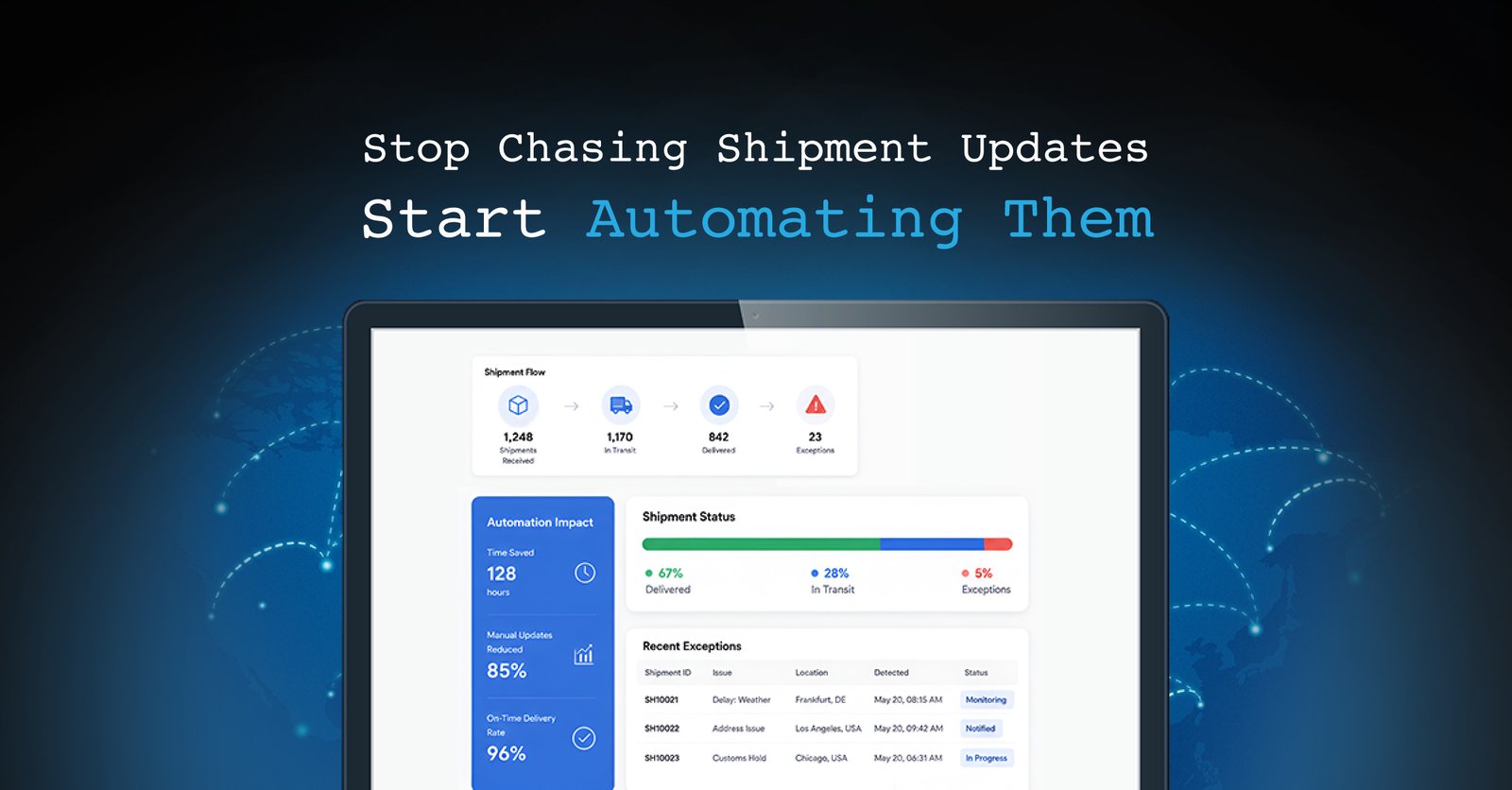
If your business ships goods to wholesale clients, you already know the question that never stops coming.
Where is my order?
It arrives by email, phone or support ticket. Sometimes by all three, from the same buyer, on the same day. And somewhere in your team, a support agent is opening a carrier portal, looking up a tracking number, copying a status update, and sending it back, only to do it again tomorrow.
That is not a support problem. That is a process design problem. And automated B2B shipment tracking is how modern wholesale operations solve it.
Manual tracking works fine when order volumes are low and carrier relationships are simple. But wholesale operations rarely stay that way.
As order volumes grow, carrier networks expand, and client expectations rise, the gap between what your team can deliver manually and what your buyers actually expect gets wider, fast.
What Happens When Shipment Tracking Stays Manual
The real damage is not just operational. It is the trust that erodes quietly every time a client has to chase you for information they expected automatically.
The answer to wholesale shipment enquiries is not a faster support agent. It is a system that answers the question before it becomes a ticket.
Automated B2B shipment tracking works by continuously polling freight and carrier APIs, FedEx, DHL, UPS, 3PLs, freight brokers — extracting live status data, and pushing updates directly into your client portal, without any human in the loop.
What Shipment Tracking Automation Covers
When the carrier API fires a status update, the data moves immediately, no manual step, delay, or missed event.
When freight API automation handles routine shipment enquiries, every team that touches wholesale operations becomes faster, more accurate, and less reactive.
Key Benefits of Automated B2B Shipment Tracking
Less time looking up tracking numbers. More time managing the relationships your business depends on.
Your Clients Already Expect It
B2B buyers have the same expectations as consumers, they want to know where their order is, right now, without sending an email. Businesses that deliver proactive shipment tracking win repeat orders. Businesses that make clients chase updates lose them quietly, without a single complaint.
When a wholesale buyer can log into your client portal and see live shipment status, updated automatically from your carrier APIs, they stop calling your support desk. That call is where relationships either deepen or erode. Automation makes sure it never has to happen.
Peak Season No Longer Means Peak Stress
Manual shipment tracking breaks at the worst possible moment, peak shipping periods, new supplier launches, sudden volume surges. Freight API automation scales perfectly with demand. Whether your team processes 200 orders a week or 20,000, the polling cadence and portal updates run the same way, at the same speed, with the same accuracy. No backlogs. No bottlenecks. No rushed manual lookups.
Support Teams Reclaim Their Time
When shipment tracking automation handles routine status queries, your support agents stop being human carrier portals. They focus on complex exceptions, relationship management, and the enquiries that genuinely require human judgement. That is a better use of skilled people, and it shows in team morale and client satisfaction scores.
Every Delay Becomes an Opportunity to Communicate
Freight delays happen. The difference between a client complaint and a client who feels taken care of is whether they heard about the delay from you, or discovered it themselves. Automated exception alerts notify your clients the moment a shipment is flagged, before they even know to worry. That kind of proactive communication is not just good service. It is a competitive advantage.
Shipment Data Should Flow to Your Systems, Not Sit in Carrier Portals
One of the most overlooked costs of manual tracking is what fragmented shipment data does to your operations. When status information sits in carrier portals instead of flowing into your ERP, OMS, or client portal, your finance team cannot reconcile deliveries, your logistics team cannot plan efficiently, and your account managers cannot have informed conversations with buyers.
Carrier API integration solves this at the source. The moment a shipment event is recorded, structured, verified data flows directly into the systems your teams already use, automatically, accurately, and without anyone acting as a data courier between a carrier portal and a spreadsheet.
Wholesale clients will always want to know where their orders are. But manually answering that question does not have to be part of your operation.
When businesses apply automated carrier API polling, real-time portal updates, and proactive shipment notifications to their wholesale tracking workflows, they eliminate one of the most persistent and costly sources of manual support work, and replace it with a client experience that builds loyalty.
With Msquare Automation, every shipment event becomes a source of clean, structured, instantly available data, pushed to your client portal, your support systems, and your ERP the moment it happens.
Because in wholesale, the businesses that answer the question before it gets asked are the ones that keep the clients everyone else is losing.
Stop losing support hours and client trust to manual status lookups. Let Msquare Automation connect your carriers, update your portal, and deflect shipment enquiries, automatically, accurately, and at any scale.

 Contact