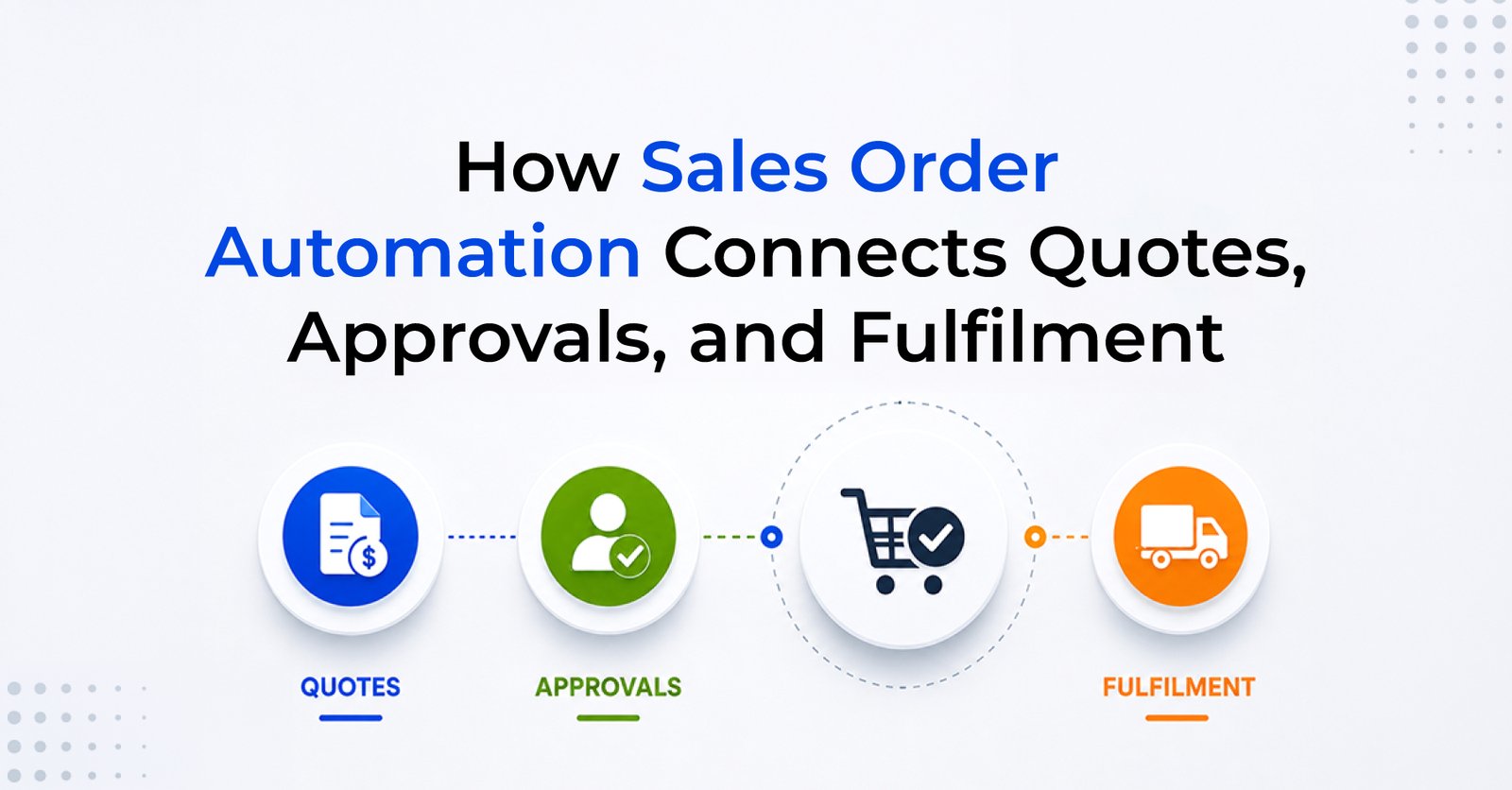
See how a well-designed sales order automation solution links sales quote automation, approvals, and fulfilment so your team spends less time on admin and more time closing deals.
In a lot of businesses, the path from “Can you send me a quote?” to “Order delivered” still looks like this:
Every one of those steps is a hand‑off. Every hand‑off adds delay and invites mistakes.
A modern sales order automation solution aims to remove those unnecessary hand‑offs. It connects sales quote automation, approvals, and fulfilment into one clear flow.
At the front of the process is sales quote automation.
Instead of building every quote from scratch, your system can:
The quote becomes a living record inside your tools, no more standalone files buried in email threads.
This is where sales automation software and sales automation AI help most: they turn quote creation from a manual task into a guided, rule‑driven process that’s both faster and more consistent.
Not every deal needs extra approval, but many do.
Instead of chasing managers manually, your workflow can:
This approval routing can sit alongside sales funnel automation and sales pipeline automation so the deal stage changes as approvals move forward.
The goal: approvals happen fast, and nobody wonders “Who’s supposed to sign off on this?”
This is where the biggest value comes in: turning approved quotes into orders without re‑typing everything.
A good sales order automation solution connects:
Once a quote is signed:
No more cutting and pasting line items into a new system. The quote is the order.
After orders are created, fulfilment workflows take over.
With e-commerce process automation and e-commerce warehouse automation, your stack can:
Even if you don’t run a classic online store, the same logic applies: orders move from “approved” to “ready to ship” without someone rebuilding them manually.
This is where e-commerce automation and automated retail commerce overlap with your sales systems. Operations teams get clearer work; customers get more reliable delivery.
Sales and fulfilment are only part of the equation. Finance teams need clean data to stay on top of revenue, tax, and reporting.
When your quote-to-order path is automated, it’s much easier to connect:
Instead of re‑entering sales data into spreadsheets, finance works from the same source of truth as sales and operations.
Once the quote → approval → order → fulfilment path is solid, you can layer other sales automations on top:
These automations help your team stay on top of opportunities without turning every reminder into a manual task.
Automation should handle the normal paths. Humans should handle the exceptions:
Your sales order automation solution can flag these cases automatically and route them to the right person, rather than trying to “auto‑approve” everything.
That’s how you keep control, even as you reduce manual work.
At Msquare, we help companies move from disconnected spreadsheets and email approvals to clear, connected automation.
We can support you with:
The goal is simple: less admin, fewer errors, and a smoother experience from first quote to final delivery.
The strongest sales teams aren’t just good at conversations, they’re good at systems.
When sales quote automation and order workflows are connected, your team can spend more time listening, advising, and closing, and less time chasing approvals or re‑typing orders.
Start by drawing your current path from quote to fulfilment. Then ask a simple question:
“Which hand‑offs here could be automated, without losing control?”
That’s where Msquare can help you design a flow that feels human, but works like a system.

 Contact